



Residential vs. Commercial Construction: Understanding Your Project Needs
Choosing the right construction approach is one of the most important decisions when planning a building project. Whether you intend to build your dream home, develop rental apartments, construct office space, or establish a commercial facility, understanding the difference between residential and commercial construction helps you make informed decisions, manage costs, and achieve your project goals.
At Evita McCray Construction (U) LTD, we understand that every construction project has unique requirements. From the initial planning stages to the final finishing touches, identifying your project needs is essential to delivering a building that meets your expectations, budget, and intended purpose.
What Is Residential Construction?
Residential construction involves building, renovating, or extending structures designed primarily for people to live in. These projects range from individual homes and apartments to townhouses, duplexes, and larger residential developments.
The main objective of residential construction is to create safe, comfortable, functional, and attractive living spaces that meet the needs of homeowners and residents.
Key Features of Residential Construction
Comfort and functionality: Designs focus on comfortable living spaces, privacy, natural lighting, ventilation, and efficient use of space.
Personalised designs: Homeowners can customise layouts, finishes, and architectural features to reflect their lifestyles and preferences.
Budget considerations: Costs are influenced by the size of the building, choice of materials, design complexity, labour, and finishing requirements.
Residential building standards: Projects must comply with applicable building regulations, planning requirements, and safety standards.
Energy efficiency: Proper insulation, ventilation, lighting, and water management can improve comfort and help reduce long-term operating costs.
Whether you are building a family home or investing in residential rental property, careful planning ensures that your building meets both your immediate needs and future expectations.
What Is Commercial Construction?
Commercial construction involves developing buildings and facilities intended primarily for business, trade, institutional, or other commercial activities. Examples include office blocks, shopping centres, hotels, warehouses, restaurants, retail outlets, and business premises.
Unlike residential projects, commercial developments often accommodate larger numbers of people, specialised equipment, business operations, and more complex building systems.
Key Features of Commercial Construction
Business functionality: Designs are developed around operational needs, customer access, employee productivity, and efficient use of space.
Larger project scope: Commercial buildings may require more extensive planning, specialised contractors, and coordinated construction activities.
Technical building systems: Depending on the project, requirements may include advanced electrical installations, ventilation, fire protection, security systems, and lifts.
Regulatory compliance: Commercial developments must meet applicable building codes, accessibility requirements, fire safety provisions, and relevant planning and environmental regulations.
Long-term operational efficiency: Durable materials, maintainable systems, and energy-efficient designs can help control operating expenses over time.
For businesses and investors, commercial construction is an opportunity to create facilities that support growth, improve service delivery, and generate long-term value.
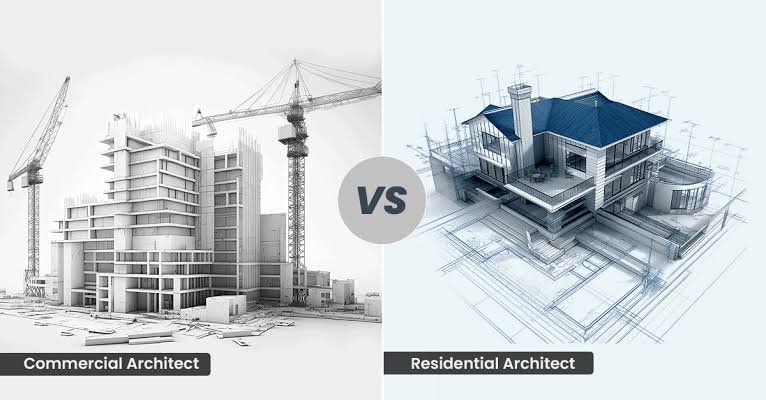
Residential vs. Commercial Construction: The Main Differences
Although both types of construction involve planning, design, materials, labour, and project management, they differ in several important ways.
1. Project Purpose and Design
Residential buildings are primarily designed to support everyday living. Comfort, privacy, aesthetics, and the needs of occupants often guide design decisions.
Commercial buildings, on the other hand, are designed around business operations. Factors such as customer movement, workspace requirements, storage capacity, accessibility, and operational efficiency play a central role.
What this means for your project: Clearly define how the building will be used before developing architectural plans. The intended purpose will influence the layout, materials, services, and overall construction strategy.
2. Construction Costs and Budgeting
The cost of residential construction depends on factors such as floor area, structural design, material selection, labour, location, and finishing standards. Custom homes and high-end residential developments may require substantial investment.
Commercial construction costs can vary considerably depending on the building’s size, structural requirements, specialised installations, safety systems, and intended use. However, commercial projects are not automatically more expensive than residential projects; the final cost depends on the specific scope and specifications.
What this means for your project: Prepare a realistic budget that accounts for design fees, approvals, construction materials, labour, utilities, finishing, and a contingency allowance for unforeseen expenses. A detailed cost estimate helps you prioritise essential features and minimise financial surprises.
3. Planning, Permits, and Regulations
Both residential and commercial construction projects require proper planning and compliance with relevant regulations.
Residential projects may involve building plan approval, land-use requirements, structural considerations, and utility connections.
Commercial developments may require additional assessments depending on their intended use, occupancy, environmental impact, fire safety requirements, and accessibility provisions.
In Uganda, project owners should confirm the applicable requirements with the relevant local authority and other responsible agencies before construction begins.
What this means for your project: Address regulatory requirements early. Delays in approvals can affect construction schedules, increase costs, and disrupt your investment plans.
4. Materials and Construction Methods
Residential construction often uses materials selected for durability, comfort, appearance, and affordability. Depending on the design, these may include concrete, steel, bricks, blocks, timber, roofing materials, and various interior finishes.
Commercial construction may require materials and structural systems suited to heavier usage, larger spans, greater occupancy, or specialised operational demands.
The choice of materials in either category should be guided by structural requirements, local conditions, quality standards, maintenance needs, and the project’s budget.
What this means for your project: Prioritise quality and suitability over the lowest initial price. Appropriate materials and sound construction practices can reduce maintenance costs and improve the building’s long-term performance.
5. Project Duration and Management
The construction timeline depends on the size, complexity, design, availability of materials, weather conditions, workforce, and approval processes.
A simple residential house may require less time and coordination than a large commercial facility. However, a complex custom home can also take considerably longer than a small commercial project.
Commercial developments may require closer coordination between architects, engineers, specialist contractors, suppliers, and other stakeholders.
What this means for your project: Establish a realistic construction schedule with clear milestones, responsibilities, and quality-control procedures. Regular progress reviews help identify challenges early and keep the project aligned with its objectives.
6. Maintenance and Long-Term Value
Residential buildings should provide lasting comfort, safety, and functionality while supporting the needs of their occupants.
Commercial properties must also meet operational demands, which may include higher occupancy, frequent use, specialised equipment, and ongoing maintenance requirements.
For property investors, both residential and commercial developments can offer long-term value when supported by good design, sound construction, appropriate maintenance, and careful financial planning.
What this means for your project: Consider the total cost of ownership, not just the initial construction cost. Durable materials, accessible service systems, and efficient building designs can contribute to lower maintenance expenses over time.
How to Choose the Right Construction Approach for Your Project
Selecting between residential and commercial construction begins with understanding your objectives, resources, and long-term plans.
1. Define Your Primary Objective
Are you building a family home, developing rental apartments, establishing business premises, or constructing a warehouse?
Your primary objective determines the building’s intended use, layout, technical requirements, and design priorities.
2. Establish Your Budget
Determine how much you can invest in the project, including construction, professional services, approvals, utilities, finishing, and ongoing maintenance.
If you are developing an investment property, consider the expected rental income or business benefits alongside the initial costs.
3. Evaluate the Site
The location, size, topography, access roads, drainage, utility availability, and permitted land use can influence what you can build and how much it will cost.
A professional site assessment helps identify potential constraints before they become expensive problems.
4. Consider Future Needs
Think beyond your immediate requirements. A growing family may need additional rooms, while a growing business may require expansion space, extra parking, or improved service infrastructure.
Planning for future needs can make your investment more adaptable and reduce the cost of later modifications.
5. Work With Experienced Construction Professionals
Architects, engineers, quantity surveyors, and construction professionals play important roles in turning your ideas into a practical, compliant, and cost-effective project.
An experienced construction partner can help you evaluate options, develop realistic budgets, coordinate project activities, and maintain quality throughout the construction process.
Why Professional Construction Planning Matters
Regardless of whether you are building a home or a commercial facility, proper planning provides the foundation for successful project delivery.
Without adequate preparation, projects can experience budget overruns, material wastage, construction delays, poor workmanship, and costly design changes.
A structured approach helps ensure that project requirements are clearly defined, resources are allocated effectively, risks are identified early, and construction activities are properly coordinated.
At Evita McCray Construction (U) LTD, we recognise the importance of aligning construction solutions with each client’s objectives. By considering the intended use, budget, site conditions, design requirements, and long-term expectations, project owners can make better decisions from the outset.
Build With Confidence With Evita McCray Construction (U) LTD
Every successful construction project starts with a clear vision and the right plan. Whether you are planning a residential development or a commercial building, understanding your project’s needs helps you choose the right design approach, manage your investment, and achieve a result that serves its intended purpose.
Evita McCray Construction (U) LTD encourages homeowners, property developers, and business owners to prioritise professional guidance, quality workmanship, and thoughtful planning at every stage of construction.
Are you planning a new building, renovation, or property development project? Contact Evita McCray Construction (U) LTD to discuss your project requirements and explore a construction approach that aligns with your goals.
Plan wisely. Build with quality. Invest in lasting value.